Brain Games for Kids: the Screen Time That Fights Falling Math Scores
Two education stories have dominated the news lately, and they're on a collision course.
Story one: phones are getting kicked out of schools. Over 30 U.S. states now restrict cellphone use in class, many moving to strict "bell-to-bell" bans, and 74% of American adults support the idea (Stateline, Brookings survey). Worldwide, 114 education systems have gone further with national bans (UNESCO).
Story two: math scores keep falling. The latest Nation's Report Card was grim: 12th-grade math down again, with 45% of seniors scoring below "Basic" — the worst result ever recorded — and only a third of graduates considered ready for college-level math (NPR on the 2025 NAEP results).
So screens are the villain, and math is the victim? Not quite. The honest version is more useful to parents:
Not all screen time is the same screen time
The screen time driving bans is the infinite kind — feeds engineered to hold attention for hours and give nothing back. But a screen is just a delivery mechanism. Three minutes of rapid-fire arithmetic delivers something completely different from three hours of shorts: it ends on its own, it demands active thinking instead of passive watching, and it leaves a kid better at something.
Researchers who study arithmetic in the brain find that mental calculation recruits the prefrontal and parietal networks kids use for working memory and problem-solving (the cognitive neuroscience of arithmetic) — the same foundation the Nation's Report Card says is eroding. We covered the full benefits of daily mental math separately; the short version is that number fluency compounds into everything from test confidence to everyday decision-making.
The problem was never "practice math." It was getting a kid to do it.
Every parent knows the flashcard death spiral: night one is fine, night three is negotiation, night five is abandoned. Worksheets fail not because kids can't do math but because worksheets have no stakes.
Here's what does have stakes: beating a parent.
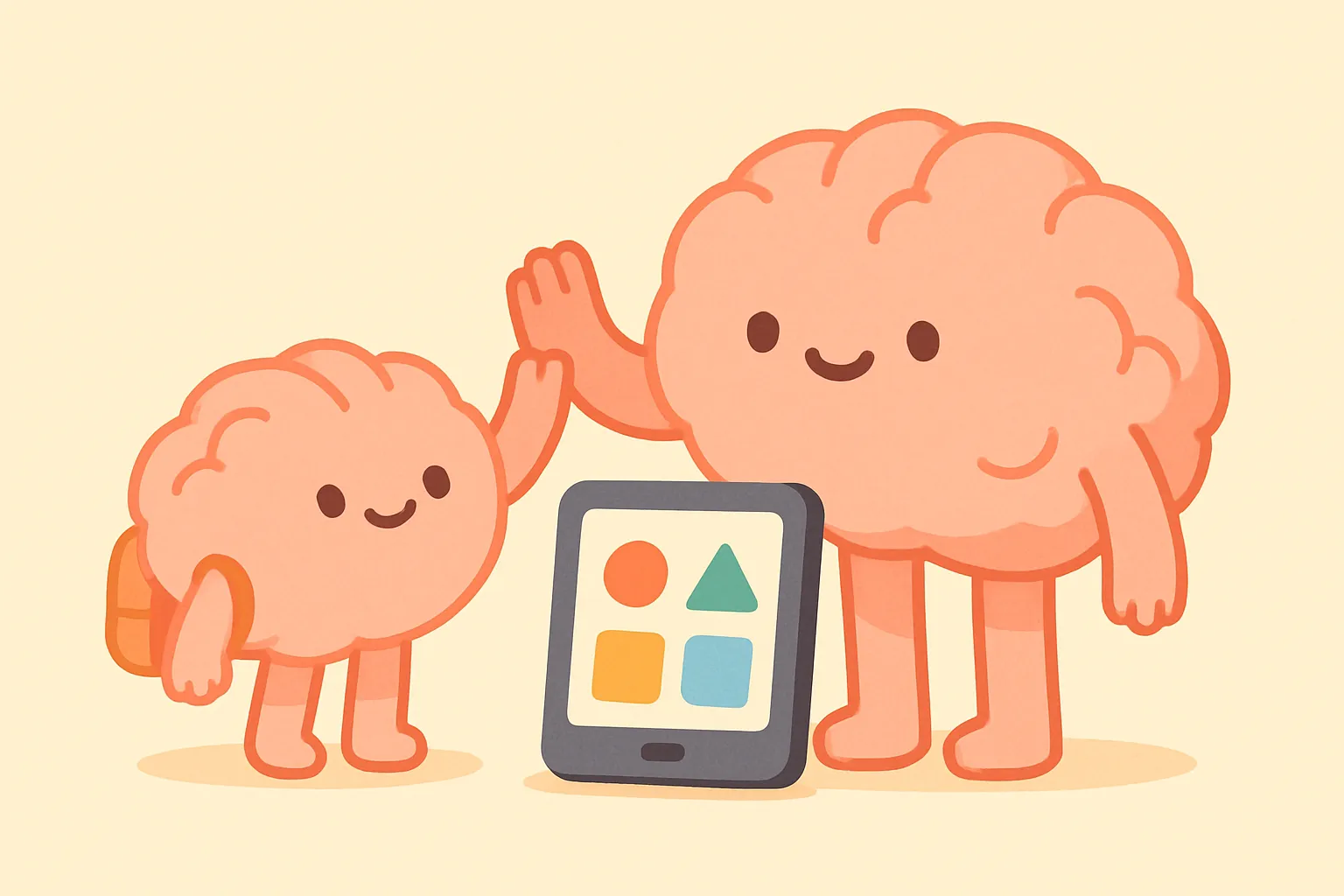
The Brain Mochi daily check is three tiny games — quick math, a color-reflex challenge, a connect-the-trail puzzle — and the whole thing takes about three minutes. Everyone in the family gets the same puzzle on the same day, and scores can be sent as challenges with a head-to-head result at the end. A ten-year-old will not practice arithmetic because it's good for them. They will absolutely practice arithmetic to end Dad's winning streak — and they'll do it every single day, which is exactly the schedule learning science recommends.
Three minutes. Same puzzle for the whole family. Loser sets the table.
Try today's brain check togetherFree · no sign-up · no ads · nothing to install
A realistic screen-time deal for your house
- The 3-minute opener. Daily check first, then whatever screen time is allowed. Math becomes the toll booth, not the destination.
- The family league. Everyone plays the same daily puzzle; scores go in the group chat. Sunday crowns the week's champion. (Grandparents are eligible — and should be playing anyway.)
- Let them win sometimes — honestly. The daily score is accuracy-based, so a careful kid can legitimately beat a rushing adult. When they win, they earned it. That feeling is the retention mechanic no app can fake.
- Talk about the misses. Each game ends with a "review what you missed" list — thirty seconds of "ohh, I see it" that's worth more than an hour of drilling.
What we deliberately left out
No ads, no in-app purchases, no accounts, no notifications, no infinite anything. One scored check per day, then it locks until tomorrow — the app literally tells your kid to come back later. If a "brain game" is designed to maximize time-in-app, it's part of the problem the phone bans are reacting to. Designed to end in three minutes, it's on your side.
Falling math scores won't be fixed by one app, and screen-time rules are every family's own call. But "practice a little arithmetic every day, voluntarily, with the family playing along" is about the highest-value three minutes of screen time a kid can have.
Your kid thinks they can beat you. Settle it.
Play today's check →Same puzzle for everyone, every day.